Landmark · Italy
Passetto di Borgo
The 800-Metre Elevated Corridor on Top of Rome's Leonine Wall, Used by Pope Clement VII to Flee the Sack of Rome in 1527, Connecting the Vatican to Castel Sant'Angelo
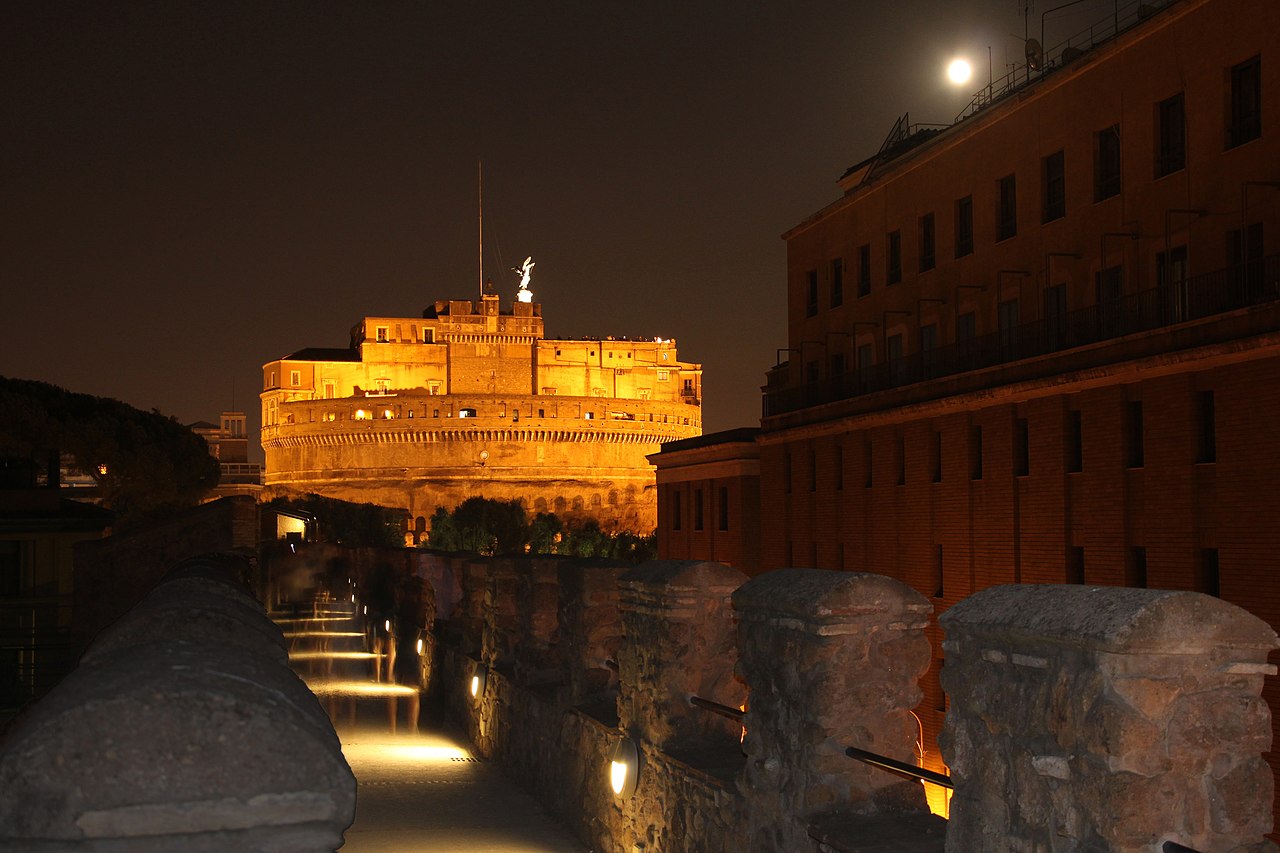
The Passetto di Borgo (also Corridoio Vaticano or Passetto) is an elevated covered walkway running approximately 800 metres along the top of the Leonine Wall, the 9th-century fortification wall built by Pope Leo IV, from the Vatican Palace to Castel Sant'Angelo in Rome. Built for defensive use and expanded repeatedly between the 9th and 16th centuries, the Passetto was used most famously on May 6, 1527, when Pope Clement VII fled through it to the safety of Castel Sant'Angelo as Habsburg troops sacked Rome below: his Swiss Guard was massacred at St. Peter's Square to buy him time. The corridor is approximately 5-7 metres wide, with arrow slits, supply rooms & drawbridges between its internal sections. It is open to the public during limited periods as part of Castel Sant'Angelo tours.
The Passage
The Passetto runs from the Apostolic Palace at the northern edge of the Vatican (entering the wall via a gate at the Porta del Cavallerizzo) to the Castel Sant'Angelo (the mausoleum of Hadrian, converted to a papal fortress in the medieval period) on the south bank of the Tiber. The walkway passes at rooftop level above the Borgo district, supported on the masonry of the Leonine Wall (built 847-852 AD). From above, Rome's roofscape is visible to the south; the walls below the walkway are pierced with arched windows and arrow slits. Some sections retain original 15th-century stonework; others have been rebuilt in brick. The Castel Sant'Angelo end includes a papal apartment suite, prison cells in the lower levels (Benvenuto Cellini and Giordano Bruno were imprisoned here) & the terrace with the bronze Archangel Michael on the summit.
The Sack of Rome, 1527
On May 6, 1527, 30,000 mutinous Habsburg troops (German Landsknechte and Spanish soldiers fighting for Charles V) entered Rome through the Porta Torrione, the section of wall closest to the Vatican. Clement VII reached the Passetto with 13 cardinals and a bodyguard of Swiss Guards; the remaining 189 Guards held the Porta del Cavallerizzo at the Vatican end of the Passetto until all but 42 were killed. Clement sheltered in Castel Sant'Angelo for seven months while the troops looted the city, the worst destruction of Rome since the 5th century. He eventually surrendered and paid ransom. The 42 surviving Swiss Guards formed the nucleus of the present Pontifical Swiss Guard.
Visiting
The Passetto interior is accessible during the Castel Sant'Angelo full tour (the museum route inside the castle) and through periodic special openings. The walkway itself (on top of the wall, not the interior passage) is open on specific guided tour days, approximately monthly, bookable through the Castel Sant'Angelo website. Walking the actual route takes 30-40 minutes one-way with a guide. The view from the Passetto wall down to the Borgo Pio street level is approximately 15 metres; the Vatican dome is visible to the northwest.
- Country
- Italy
- Region
- Roma
- Coordinates
- 41°54′12″N 12°27′29″E
- Filmed here
- Spectre (2015)
Film & TV · James Bond Spectre
The Passetto di Borgo appeared as a filming location in Spectre (2015, dir. Sam Mendes), the Bond film in which 007 attends a Spectre organisation meeting in Rome. The production used the Passetto and the surrounding Borgo district as exterior Roman locations; the corridor's ancient stone walls and elevated position above street level provided atmosphere for the Rome sequences.